Group vs Private Dog Training: What Each Format Means
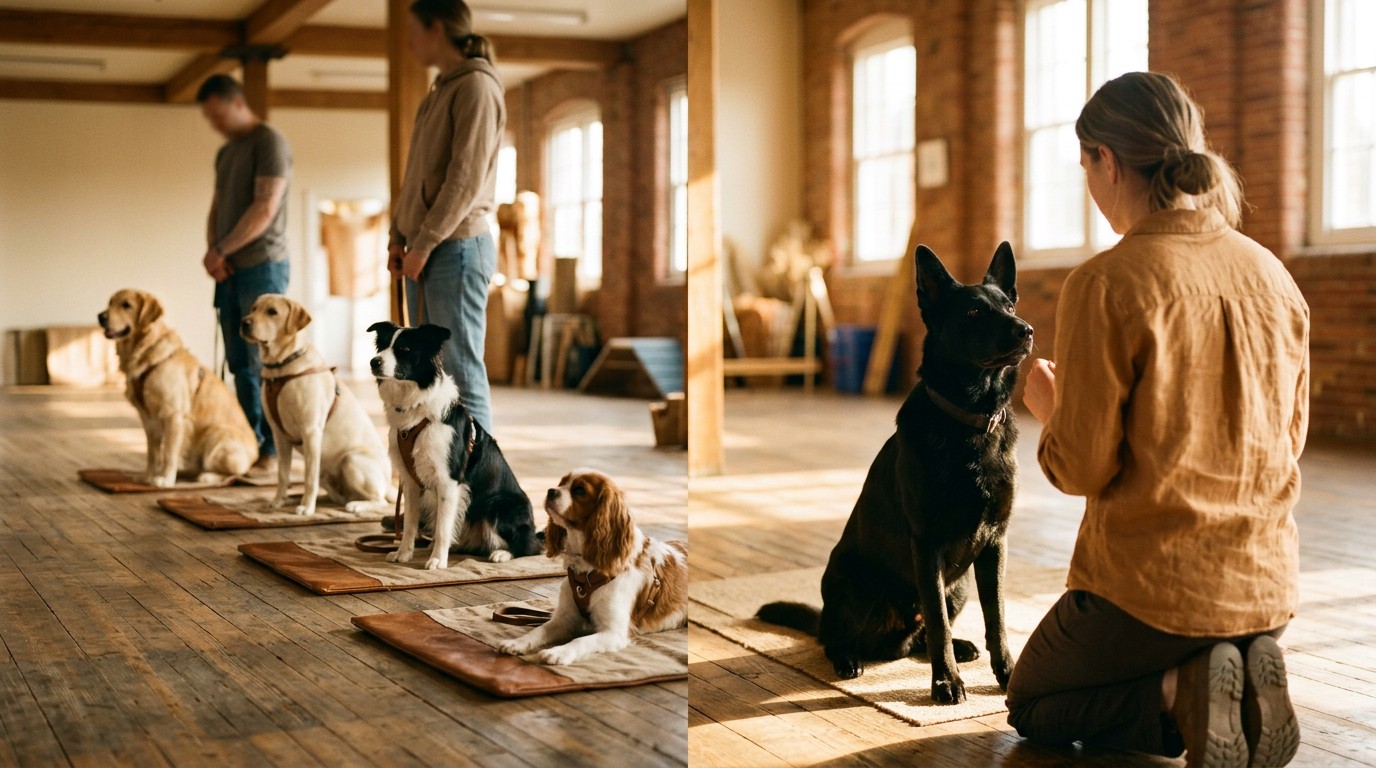
Group dog training classes put four to ten dogs in one room with a single instructor working through a fixed curriculum, usually basic obedience skills like sit, stay, and leash walking. Private dog training lessons work the other way around: one-on-one instruction, with the trainer building the plan around your dog, your schedule, and your goals.
Both formats are taught by the same kinds of professionals, often holding credentials such as CPDT-KA. The differences that matter to your wallet are class size, session length, and how much individual attention the price includes. This guide compares costs and inclusions, not training methods or results.
Pricing note - reviewed August 5, 2026: Every figure in this article is quoted from a named published cost guide or an official retail price list, each opened on August 5, 2026. These are national published figures, not local quotes or Fetch Compass averages - programs differ in scope, and prices vary by market. Confirm the itemized total directly with a trainer.
How Much Group Classes and Private Lessons Cost
Group classes are the cheaper entry point per session, while private lessons charge a premium for undivided attention. HomeGuide lists group classes at $30-$50 per class and private training at $45-$120 per hour. Those are national ranges - a big-metro trainer can sit above them, a rural club class below. For every format’s published figures, see our full dog training cost guide.
Group class pricing: per session and per course
Most group programs are sold as packages: one upfront price for a basic obedience course of 4 to 8 weekly sessions, with puppy classes on the same model. HomeGuide lists $120-$200 for a 6-8 week group package, and Sit Means Sit’s 2026 price guide lists $150-$300 for a six-week block. Retail chains anchor the market too - PetSmart lists $149 for any 6-week class ($129 on a promo posted at review, August 5, 2026).
Private lesson pricing: per session and packages
HomeGuide lists private training at $45-$120 per hour, and notes that prepaying a pack of 3-10 sessions can bring the price down to $35-$75 per session. Rover’s expert-sourced guide puts private in-person training at $150 per hour, a useful ceiling for higher-cost markets. In-home dog training often sits at the higher end of a trainer’s private rates because travel time is built in, while lessons at the trainer’s facility may cost less.
Cost Per Hour: The Fair Way to Compare
A group class looks cheap until you divide the price by the instructor’s attention. Take the top of HomeGuide’s group range: a $50 class with eight dogs in a 60-minute session works out to roughly 7 to 8 minutes of one-on-one instruction per dog. A private hour at HomeGuide’s $45-$120 rate buys all 60 minutes of dedicated attention, or $0.75 to $2.00 per instructed minute. This is illustrative arithmetic on the published figures, not a quoted price and not a measure of value - group time around other dogs is part of what you are paying for.
Run the same math on packages. A six-week group course at Sit Means Sit’s $150-$300 block price, with six dogs per class, delivers around 60 minutes of individual attention across the whole course. Four private sessions prepaid at HomeGuide’s $35-$75 pack rate total $140-$300 and deliver 240 minutes. The “expensive” option can cost less per hour of direct instruction.
Two variables swing this calculation hard:
- Class size. A cap of four dogs doubles your share of attention versus eight at the same price.
- Session length. Group classes often run 45 to 60 minutes; some private lessons run 90.
All Dog Training Formats Side by Side
Six formats show up on most price lists, and they differ less by what is taught than by where the work happens, who handles the dog, and how much of your own time is required. The table below compares them on published cost and logistics.
Comparison table: group, private, board and train, day training, in-home, online
| Format | Typical published cost | Session format | Distraction level | Scheduling flexibility | Usually offered for |
|---|---|---|---|---|---|
| Group classes | $30-$50 per class (HomeGuide) | 4-10 dogs, fixed weekly curriculum | High - other dogs and handlers present | Low - set class times | Puppies, basic obedience |
| Private lessons | $45-$120 per hour (HomeGuide) | One-on-one at trainer’s facility | Low to moderate, controllable | Moderate - booked per session | Custom goals, focused skill work |
| Board and train | $500-$1,250 per week (HomeGuide) - see our board and train cost guide | Dog stays at the facility for 1-4 weeks | Set by the trainer | High for the owner - dog is away | Owners short on daily training time |
| Day training | $35-$75 per day (HomeGuide) | Trainer works the dog daytime, returns it each evening | Set by the trainer | High - fits work schedules | Owners who want daily pro sessions without boarding |
| In-home training | About $125 per hour for in-home work (HomeGuide) | One-on-one at your home | Low - familiar environment | High - trainer comes to you | Household-specific skills |
| Online training | $35 per week, virtual (Rover blog) | Video calls plus homework | None during sessions | Very high - no travel | Remote areas, budget-first owners |
Read the table as a menu of trade-offs, not a ranking. Young dogs usually start in puppy training classes.
How to Choose Between Group and Private Training
Neither format is a better product across the board - they solve different logistics problems. Group classes bundle in what a private lesson cannot: other dogs and handlers in the room, which is why many owners pick group settings for socialization practice and leash work around real-world noise. Private lessons trade that away for one-on-one instruction, a curriculum shaped around your goals, and scheduling that bends to your calendar instead of a fixed Tuesday-night slot.
Both formats typically cover the same foundation skills - sit, stay, recall, loose-leash walking - so the choice usually comes down to three practical factors:
- Budget. Group sessions cost less per session; private lessons often cost less per minute of individual attention.
- Logistics. A fixed weekly class time versus booked-per-session flexibility, plus travel to a facility versus in-home options.
- Your dog’s starting point. If your dog is reactive, fearful, or struggles around other dogs, talk to the trainer before enrolling - this is about matching the service, not a behavior recommendation, and they may point you toward programs like those in our aggressive dog training guide.
When trainers suggest a hybrid path
Many trainers combine formats rather than pick one. A common sequence is private-first: a few one-on-one lessons to build basics, then a group class to practice around distractions. The reverse also appears on price lists - a puppy group course first, private sessions later for specific goals. Neither path guarantees any particular result; treat both as package options to discuss with the trainer.
What a Complete Training Quote Should Include
A verbal price is not a quote. Before you pay, ask the trainer to put the full offer in writing - ideally a training agreement that spells out what the headline number buys. Two programs at the same price can differ by hundreds of dollars in what they itemize, so if an item below is missing from the quote, ask - a professional trainer will not mind adding it.
Quote checklist: line items to look for
- Number of sessions. The exact count included in the price, not “a course” or “a program.”
- Session length. 45, 60, or 90 minutes changes the cost-per-hour math entirely.
- Curriculum. Which skills are in scope and what would cost extra.
- Class size cap (group formats). The maximum number of dogs per class, in writing.
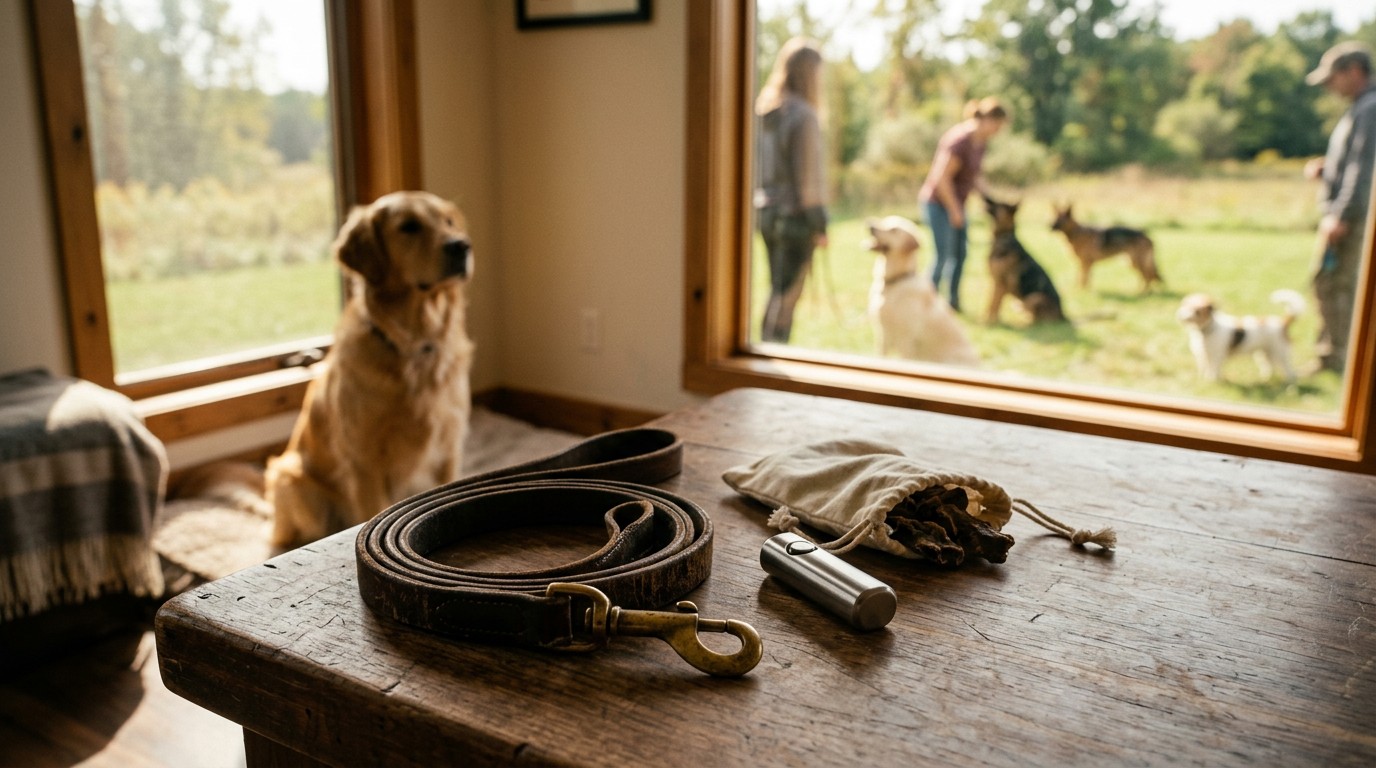
- Equipment. Whether a leash, long line, treat pouch, or other gear is included or billed separately.
- Follow-up sessions. Whether post-course check-ins are included, and at what rate if not.
- Refund policy. What happens if you cancel before the course starts or partway through.
- Make-up classes. Whether a missed group session can be rescheduled or is forfeited.
- Format-switch terms. How moving between group and private mid-program affects the total price.
Keep the signed copy - if a dispute comes up, the written agreement, not a phone conversation, settles it. Treat any published range as background reading, and confirm the itemized quote directly with the trainer before you pay.
How to Vet a Trainer Before You Pay
A trainer’s title tells you nothing on its own - “dog trainer” is an unregulated term in the US, so anyone can use it. Certifications, by contrast, can be verified. The CPDT-KA credential marks a certified professional dog trainer - it is issued by the Certification Council for Professional Dog Trainers (CCPDT), which maintains a public online directory, so search the trainer’s name before you pay. The IAABC (International Association of Animal Behavior Consultants) also lists its members in a searchable directory.
You do not need to referee the methods debate yourself. Ask the trainer to describe their approach in plain language, then compare it with the AVSAB (American Veterinary Society of Animal Behavior) position statements, a widely cited reference for humane training practices.
Questions to ask before signing up
- What is the class size cap, and is it in the written agreement?
- Who actually teaches the sessions - you, or an assistant? What are their credentials?
- How would you describe your training methods?
- What happens if the group format turns out to be a poor fit for my dog?
- Can I observe a class before paying?
Any hesitation on these questions is information too.

Group vs Private Dog Training: FAQ
Which format is cheaper per hour of instruction?
Group classes cost less per session - HomeGuide lists $30-$50 per class against $45-$120 per hour for private training - but private lessons often cost less per minute of one-on-one attention once you divide by class size and session length.
Can I combine group and private training?
Yes, many trainers sell hybrid packages - for example, private lessons first, then a group class. Ask how switching formats affects the total price.
How much does a typical group course cost?
HomeGuide lists $120-$200 for a 6-8 week group package, Sit Means Sit lists $150-$300 for a six-week block, and PetSmart lists $149 for any 6-week class. Package contents vary, so confirm the itemized quote directly with the trainer.
Can my puppy join a group class right away?
Most programs start puppies in dedicated puppy classes. Discuss age requirements and vaccination policies with the trainer before enrolling.
How do I verify a CPDT-KA certificate?
Search the trainer’s name in the CCPDT’s public online directory. The IAABC also maintains a searchable member list.
Choosing With Confidence
Whatever format you choose, the deciding inputs are the same: your budget, your schedule, and your dog’s starting point. Group and private training are different logistics products, not rivals in quality, and prices vary by market - so let the paperwork pick between finalists. A written agreement with a class-size cap, stated session lengths, and verifiable credentials tells you more than any national price range.
Pricing: All prices in this article are published ranges for general orientation only. Actual costs vary by location, trainer, and program - always confirm an itemized written quote directly with the trainer before paying.
Health and behavior: This article covers costs and formats only and is not veterinary or behavioral advice. If your dog shows aggression, fear, or reactivity, or if your puppy is not fully vaccinated, consult a veterinarian or qualified behavior professional before enrolling in group classes.
Find group classes near you
Compare top-rated trainers offering group classes in Chicago, Atlanta, New York, Los Angeles and Denver.
Program formats and prices vary by trainer and city - confirm the current package details directly with the trainer.